Your Gut Feeling Isn't a Strategy: Use This Brand Personality Framework
Struggling to describe your brand's intangibles? Use our brand personality framework to finally define your brand attributes and find your unique brand voice.
You know what your brand feels like. You have a gut instinct for why it's special. But when your marketing team asks, "What should our brand voice be?" you struggle to give them a clear answer beyond "just make it sound like us."
A brand's most valuable assets are often its intangible qualities, but a leader's "gut feeling" is not a scalable, teachable, or consistent strategy. This ambiguity leads to confused teams, generic marketing, and a brand that fails to connect.
This post offers a practical approach to solving this abstract problem. It will show you how to translate your intuitive "gut feeling" about your brand into a concrete framework that your entire team can use consistently.
A leader can translate their intuitive brand feeling into a concrete and consistent framework by using a three-step 'Intangible Translator' method: first, choosing primary and secondary brand archetypes as a foundation; second, using a 'This, Not That' exercise to define sharp boundaries; and third, distilling these findings into 3-4 core brand voice characteristics that guide all communication.
The High Cost of an Undefined Brand Personality
It Creates Inconsistency Across Channels
Without a guide, your brand's voice on LinkedIn sounds different from its voice on the website. That voice sounds different from the one used in a sales presentation. This inconsistency erodes trust and directly impacts the bottom line. According to Marq (formerly Lucidpress), 68% of businesses say that consistent branding has contributed to revenue growth of 10 to 20 per cent or more.
It Makes Onboarding New Team Members a Guessing Game
New hires cannot read your mind. An undefined personality forces them to guess what the brand should sound like. This leads to off-brand work, constant revisions, and a slowdown in their successful integration into your company.
It Dilutes Your Competitive Advantage
Your competitors can copy your product, but they cannot copy your personality. If you cannot describe your brand's intangible qualities, you are failing to leverage your most defensible asset. This connection between personality and consumer choice is clear. A study from Sprout Social found that 40% of consumers cite "memorable content" as a factor that helps brands stand out. A defined personality is the engine of memorable content.
The "Intangible Translator": A 3-Step Brand Personality Framework
This framework is designed to translate your abstract feelings into concrete brand attributes. These attributes will guide every piece of communication your company produces.
Step 1: Choose Your Primary & Secondary Archetypes
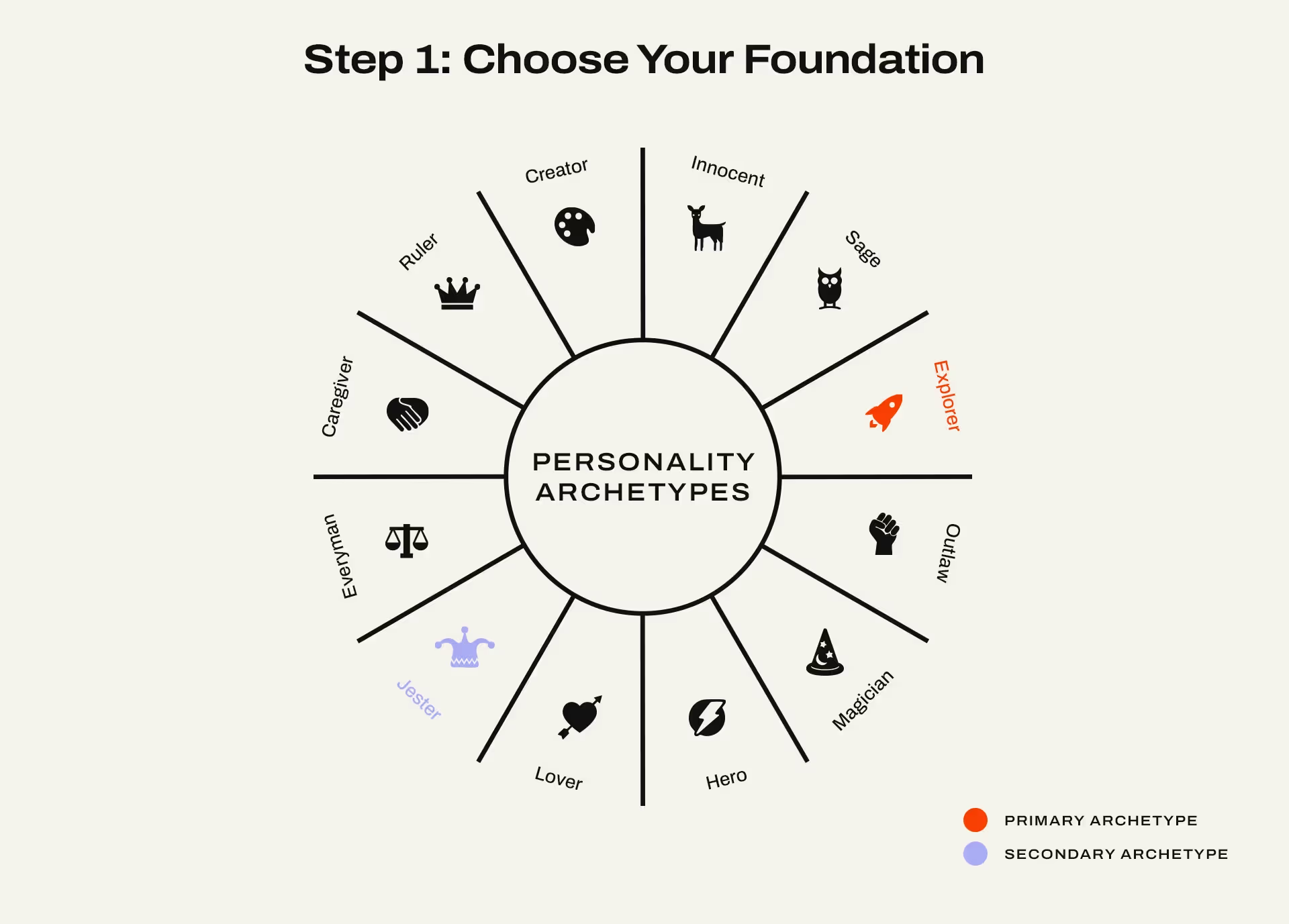
Brand archetypes are universal personality shortcuts that create an instant sense of familiarity. Choosing one or two gives you a strong foundation for your brand's character. There are 12 primary archetypes. For example, Apple is The Creator, focused on self-expression and innovation, while Nike is The Hero, focused on mastery and achievement.
Step 2: Use "This, Not That" to Add Nuance
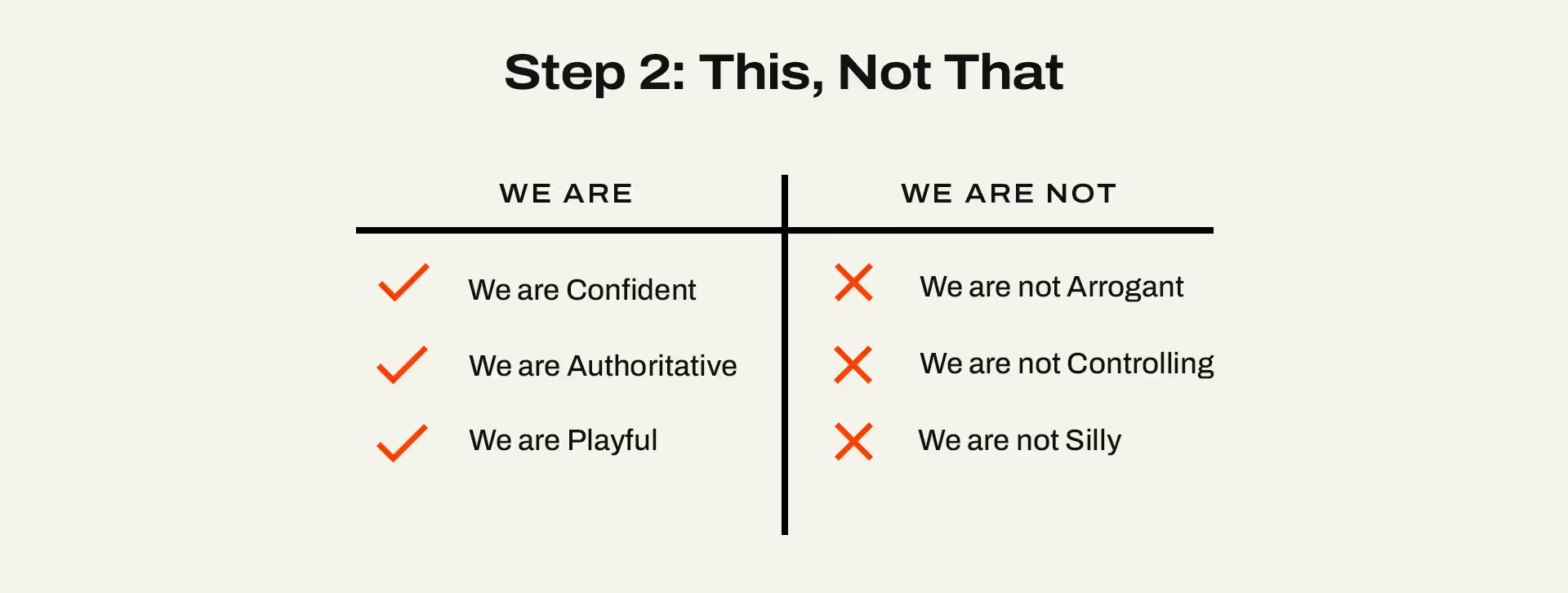
An archetype is only a starting point. This step is the most critical for achieving precision. The "This, Not That" exercise defines the boundaries of your personality, ensuring it is sharp and distinct.
Here are three powerful examples:
- We are Confident, not Arrogant.
- We are Authoritative, not Controlling.
- We are Playful, not Silly.
Step 3: Define Your Core Brand Voice Characteristics
Based on the first two steps, you can distill your findings into 3-4 core brand voice pillars. Marketing expert Ann Handley says, "Voice is the hallmark of style. It’s the thing that breathes life into the writing." This framework is how you define that life-giving voice.
For example, if you are a 'Sage' archetype and you are 'Authoritative, not Controlling,' your brand voice characteristics might be:
- Clear
- Confident
- Insightful
Bringing Your Brand Voice to Life (An Example)
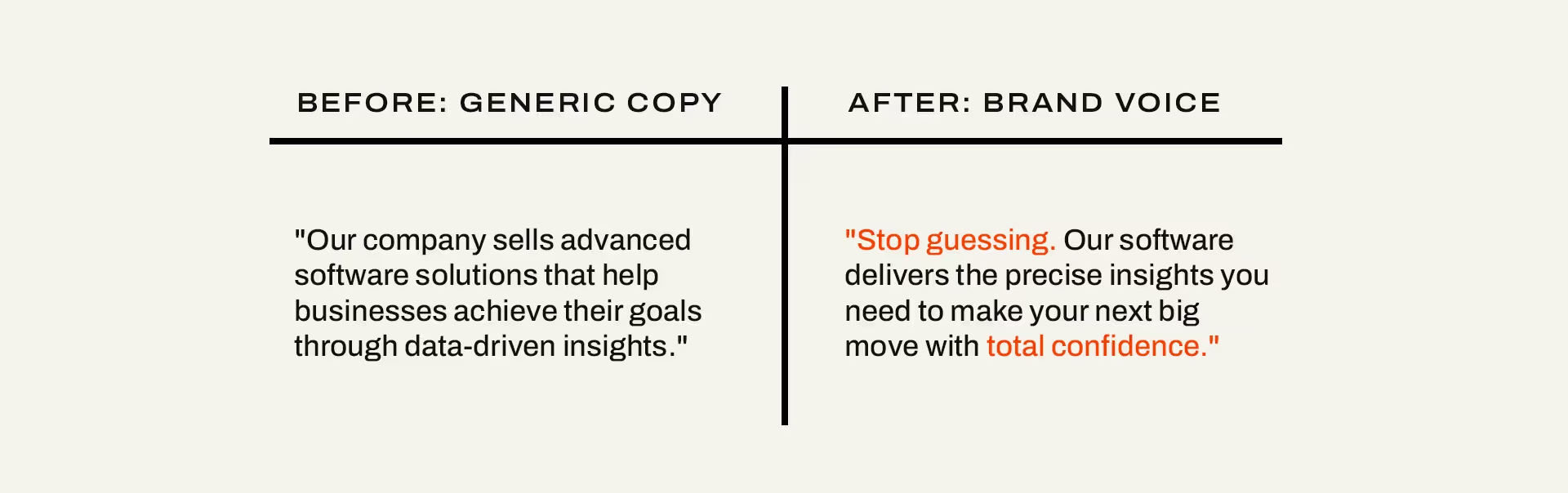
This framework transforms generic copy into personality-driven copy.
Generic Copy (Before Framework): "Our company sells advanced software solutions that help businesses achieve their goals through data-driven insights."
Personality-Driven Copy (After Framework - Voice is Confident, Simple, Insightful): "Stop guessing. Our software delivers the precise insights you need to make your next big move with total confidence."
From a Defined Voice to a Complete Strategy
This brand personality framework is the essential first step to aligning your team and building a memorable brand. It gives you the tool to finally describe brand intangibles in a way everyone can understand. But your brand's voice is just one piece of the puzzle.
<div class="richtext_highlight">To build a truly powerful brand, you need to connect this personality to your core message, your customer, and your market position. <a href="/lp/clarity-blueprint" > Download our free, actionable guide, The Brand Clarity Blueprint</a>, to get the full process. It includes the 'Intangible Translator' module and the strategic frameworks that tie it all together.</div>
Unleash Your Brand's Soul
Your brand's "gut feeling" is a valuable instinct, but it is not a strategy. By using a framework to translate that feeling into clear attributes, you empower your entire team to build a consistent and compelling brand.
Stop being the sole keeper of your brand's soul. Define it, document it, and unleash it.




The Accelerator

Building brands with powerful market presence





Leading Brands Choose us
Book in with one of our experts.