Building a website? Why Webflow is the way to go
Ignite your website's potential with Webflow. See why savvy entrepreneurs use it to create stunning online experiences. Start unlocking your success now.
PART 1 OF A 3-PART SERIES
A trilogy. Like The Fellowship of the Ring, The Two Towers, and Return of the King. But not like The Hobbit.
Or like Star Wars episodes IV, V, and VI. But not I, II, and III. And definitely not VII, VIII, and IX.
BEGIN.
Are you feeling overwhelmed by all the website building tools out there? It can be time-consuming and confusing to choose the right one, not to mention potentially costly. But fear not, because we've got the solution for you: Webflow. We've been using it for years to create stunning websites from scratch. So, you know we're not just blowing smoke when we say it's the best option available.

What is Webflow?
Webflow is a powerful design platform that operates within your browser. From initial concept to finished product, Webflow empowers you to create websites with ease. Build everything from simple landing pages to complex eCommerce stores, all with a completely visual interface.
For most folks, what we just said is all you need to know to start crushing it with Webflow. But, if you're one of those curious cats who wants to get knee-deep in the details, then keep on reading. Trust me, the time you spend reading this will pay off big time down the road. You won't have to waste countless hours sifting through other platforms trying to find the right fit for you and your business.
Companies that use Webflow
Consider the impressive list of well-known companies that trust and utilize Webflow as a robust and reliable platform for their website needs. These reputable organizations showcase the versatility and effectiveness of Webflow:
Dell


Dell, through its Dell Design System, documents the visual language, interaction patterns, and UI components used across Dell Technologies’ digital products and websites. The system provides reusable elements—such as buttons, typography, layouts, navigation, and accessibility guidelines—aimed at ensuring consistency and usability at scale. Designers and developers use it as a shared source of truth to prototype and build interfaces more quickly while adhering to brand standards. As part of a global technology company that sells PCs, servers, storage, and services, the design system helps align customer experiences across marketing sites, ecommerce flows, and management consoles.
Dropbox


Dropbox is a cloud‑based file hosting and collaboration service that lets users store, synchronize, and share files across devices and with other people. Launched in 2007, it popularized the idea of a simple folder on your computer that seamlessly syncs to the cloud and other machines. Over time, Dropbox expanded into team collaboration with products like Dropbox Business, shared folders, granular permissions, and integrations into tools such as Microsoft 365 and Slack. The company also offers features like document scanning, file requests, and content organization, aiming to be a central hub for an individual’s or team’s digital work.
Rakuten


Rakuten is a Japanese multinational conglomerate that operates a diverse portfolio of internet and fintech businesses, including e‑commerce marketplaces, credit cards, banking, mobile services, and digital content. Often called the “Amazon of Japan,” its flagship marketplace connects merchants and consumers, augmented by loyalty programs like Rakuten Points. The company also runs global cashback and affiliate services, giving shoppers rewards for purchasing through partner retailers. In fintech and communications, Rakuten offers mobile networks, securities, and online banking, aiming to create an integrated ecosystem where users engage with multiple services under one brand.
DocuSign


DocuSign is a pioneer and market leader in electronic signatures and digital agreement management, enabling organizations to prepare, sign, and store contracts securely online. Its platform replaces paper‑based workflows by letting parties sign from any device, with robust audit trails, identity verification options, and compliance with regulations like eIDAS and ESIGN. DocuSign extends beyond simple signatures into full contract lifecycle management, including templates, automated routing, notifications, and analytics. It integrates with major business systems such as Salesforce, Microsoft, and SAP, making it a core infrastructure component for sales, HR, legal, and procurement processes in many enterprises.
Anthropic


Anthropic is an AI safety and research company focused on building large language models and related tools that are helpful, honest, and safe for enterprise and developer use. Founded by former OpenAI researchers, it develops the Claude family of models and a suite of APIs and products for chat, retrieval, and workflow automation. The company emphasizes constitutional AI, a technique for aligning models with a set of guiding principles rather than ad‑hoc human reinforcement alone. Anthropic works with large organizations in sectors like finance, healthcare, and customer support, positioning itself as a leading vendor for high‑stakes, compliant AI deployments.
Discord

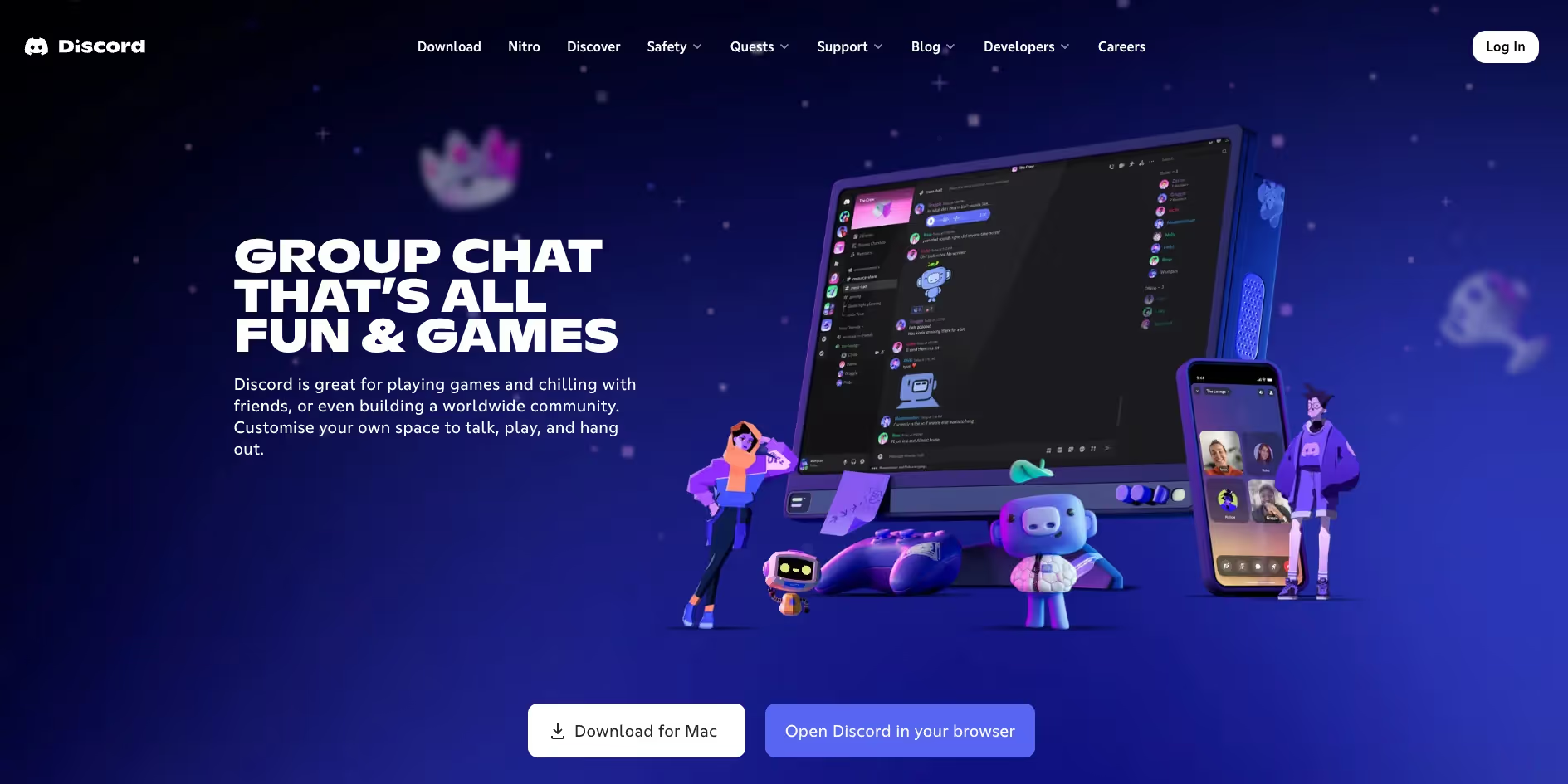
Discord is a widely-used, multi-faceted digital platform, offering voice, video, and text chat capabilities for tens of millions of users aged 13 and above. It serves as a versatile space for communities of all sizes, connecting individuals and groups through diverse conversations ranging from art projects to mental health support. With private, invite-only servers and larger public communities, the platform revolves around user control and personal flexibility, enhancing user experience. Discord's main strength lies in its combination of reliable technology and community-centric focus, making it a cherished digital home where users can truly embrace their interests, passions, and connections with like-minded individuals.
Upwork


Upwork is a global online marketplace that connects businesses with freelance talent across fields such as software development, design, writing, marketing, and customer support. Clients post jobs or projects and receive proposals from freelancers, who can be paid hourly or on a fixed‑price basis, with tools for time tracking and milestone management. The platform offers features like escrow, dispute resolution, and ratings to build trust between parties. Upwork also provides enterprise solutions, including curated talent pools and compliance support, allowing larger organizations to manage distributed freelance workforces at scale.
Typeform


Typeform is a no‑code online form, survey, and quiz builder focused on creating visually engaging, conversational experiences rather than traditional static forms. Its interface presents one question at a time, which often leads to higher completion rates and a more user‑friendly feel on both desktop and mobile. Users can customize design, logic jumps, and question types, and then embed forms on websites or share via links. Typeform connects responses into workflows through integrations with tools like Slack, Google Sheets, HubSpot, and Zapier, making it popular for lead capture, feedback collection, onboarding, and lightweight research.
Fivetran


Fivetran is a managed data integration platform that automates the extraction, loading, and, increasingly, transformation of data from numerous SaaS applications, databases, and event streams into cloud data warehouses. It provides pre‑built connectors that handle schema changes and incremental updates, significantly reducing engineering overhead compared to custom pipelines. Fivetran focuses on reliability and low maintenance, operating on a consumption‑based pricing model where customers pay based on data volume. By centralizing data in warehouses like Snowflake, BigQuery, or Redshift, it enables analytics, BI, and machine learning teams to work from a consistent, up‑to‑date data foundation.
Verifone


Verifone is a long‑established payments technology company best known for its point‑of‑sale (POS) terminals used in brick‑and‑mortar retail, hospitality, and other in‑person commerce environments. Over time, it has expanded into software and services that support payment processing, device management, and value‑added features like loyalty programs. Verifone provides solutions for card, mobile wallet, and contactless payments, working with acquirers, merchants, and financial institutions globally. Its offerings aim to deliver secure, compliant, and reliable transactions, with cloud‑connected platforms that give merchants centralized control and reporting across their payment infrastructure.
Lattice


Lattice is an HR software company that delivers a unified people‑success platform, combining performance management, employee engagement, goals (OKRs), and people analytics. It helps organizations run performance reviews, one‑on‑ones, feedback, and recognition in a structured, trackable way. Lattice’s engagement tools include surveys and pulse checks that let HR teams identify morale issues and trends. With reporting and analytics, leaders can spot patterns in performance, retention, and sentiment, linking people data to business outcomes and informing decisions about culture, development, and organizational design.
Kajabi


Kajabi is an all‑in‑one platform built for knowledge entrepreneurs, enabling them to create, market, and sell digital products such as online courses, coaching programs, and memberships. Users can build websites and landing pages, host video content, and structure curricula without needing custom development. Kajabi also includes email marketing, automation workflows, checkout pages, and analytics, reducing the need to stitch together multiple tools. With integrated payment processing and customer management, it focuses on helping creators manage the full lifecycle from lead generation through onboarding and retention within a single, branded environment.
Waveapps


Wave, often referred to as Waveapps, is a financial platform targeted at small businesses, freelancers, and solo entrepreneurs, providing free core tools for accounting, invoicing, and receipts. Users can track income and expenses, generate financial reports, and send professional invoices with minimal setup. The company monetizes through paid services like payroll, payment processing, and advisory offerings rather than the base software. Acquired by H&R Block, Wave benefits from broader tax and financial expertise, helping users bridge everyday bookkeeping with tax preparation and compliance needs.
Jasper AI

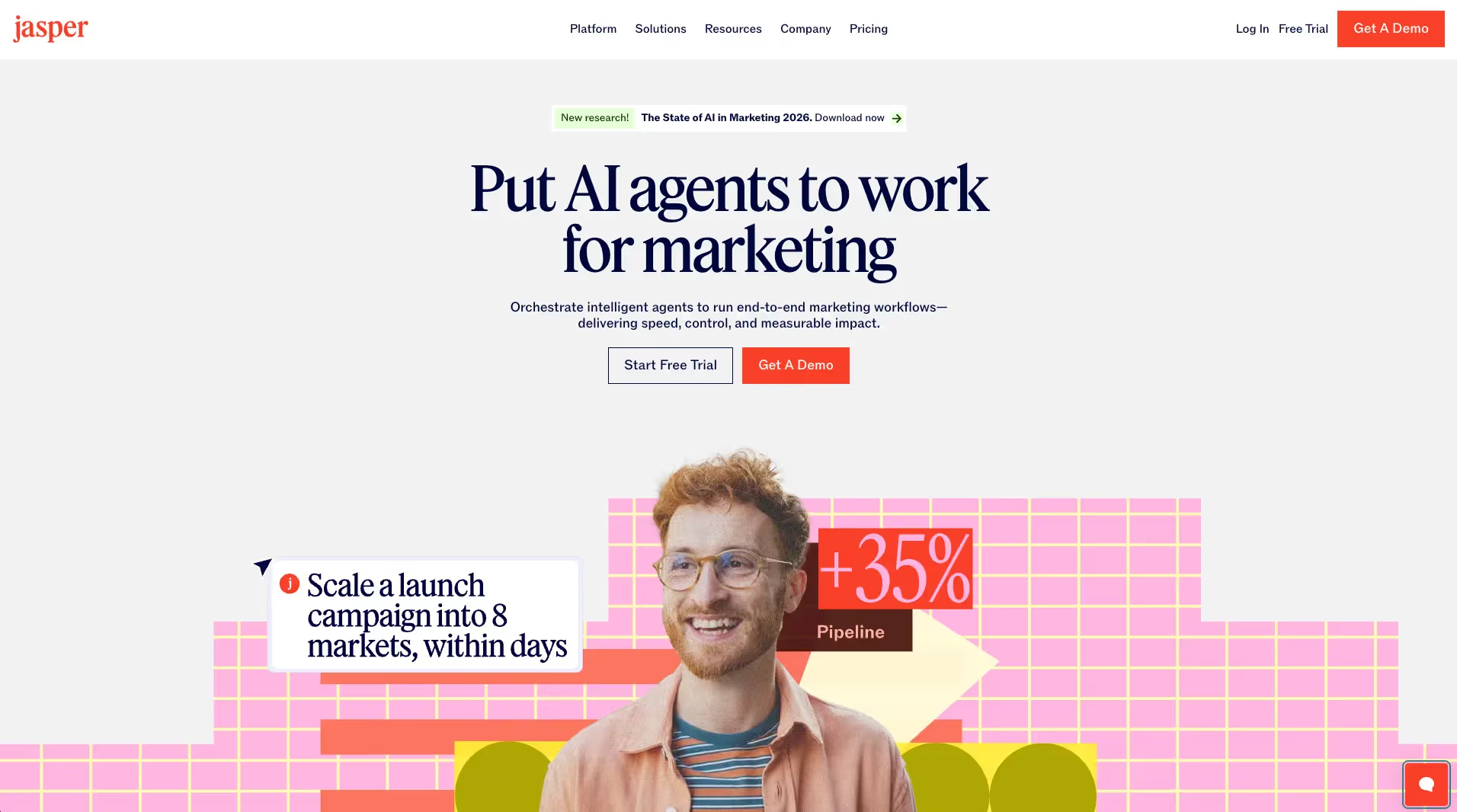
Jasper AI is a generative AI platform designed primarily for marketing and sales teams, helping them produce on‑brand content faster across many formats. It combines large language models with brand style guides, templates, and collaboration features so teams can generate blog posts, ad copy, emails, landing pages, and social content. Jasper offers workflows tuned for campaigns, SEO, and creative ideation, with tools like document editors and AI “campaign briefs” that keep messaging consistent. It integrates with common marketing stacks and focuses on enterprise‑grade governance, providing admin controls, user management, and data security features for larger organizations.
Copy.ai


Copy.ai is a generative AI tool focused on creating marketing and business copy, helping users craft emails, social media posts, product descriptions, ads, and blog ideas from short prompts. It offers templates and workflows tuned for specific use cases like cold outreach, LinkedIn posts, or e‑commerce listings. Users can iterate quickly by generating multiple variations and refining outputs in an editor, often collaborating within teams. Copy.ai targets marketers, founders, and agencies looking to speed up ideation and drafting, and it increasingly incorporates automation features that connect AI‑generated content into broader sales and marketing workflows.
Upguard


UpGuard is a cybersecurity company specializing in attack surface management, third‑party risk, and data leak detection for organizations concerned about external exposure. Its platform continuously scans the internet to identify assets, misconfigurations, and vulnerabilities that could be exploited by attackers. Customers can monitor their own infrastructure as well as vendors and partners, receiving security ratings, detailed issue breakdowns, and remediation guidance. UpGuard also tracks data breaches and leaked credentials, helping security teams quickly discover and respond to exposures, and it integrates with existing security workflows via APIs and reporting tools.
Harvard Student Agencies


Harvard Student Agencies (HSA) is a student‑run nonprofit corporation affiliated with Harvard University, known as one of the largest student‑run businesses in the world. It operates a portfolio of ventures—including tutoring, test prep, publishing, retail, and creative services—that provide both employment and hands‑on business experience for Harvard undergraduates. Revenues support student wages and educational opportunities rather than shareholders, reflecting its nonprofit mission. HSA gives students real responsibility in areas like management, operations, sales, and marketing, effectively functioning as a training ground for entrepreneurship and leadership while serving customers on and beyond campus.
These notable companies' reliance on Webflow demonstrates the platform's ability to cater to diverse needs and industries, further solidifying its reputation as a powerful and trustworthy website design tool.
Webflow Origins

The journey began in 2012 when Vlad Magdalin, his brother Sergie – both religious refugees from Russia – and their friend Bryant Chou founded Webflow. Vlad initially worked on the project everyday after coming home from working as a software engineer at Intuit. Despite facing fierce competition, Webflow managed to beat the odds, thanks to the growing interest in "no code" software and by joining Y Combinator's accelerator.
Fueled by $2.9 million in seed funding in 2014, the trio decided to focus on bootstrapping their way to a self-sustaining business. Overcoming early challenges, such as limited savings, no income streams, and accumulating credit card debt, Webflow reached profitability with over $10 million in annualized revenue under Magdalin's leadership.
Now valued at $4 billion, Webflow has made its mark as a Silicon Valley unicorn, leading the pack among startups revolutionizing the way companies build websites. After a decade, Webflow serves over 200,000 customers, including freelancers, agencies, startups, and enterprises, and is on the verge of reaching $100 million in annual revenue, demonstrating careful market-entry planning, exceptional initial-stage performance, strategic resource management, and fast growth.
User-Friendly Interface

The Webflow Designer empowers you to construct your website's framework, craft its appearance, and incorporate content, interactivity, animations, and custom code – all to create fully operational websites, landing pages, prototypes, presentations, and beyond.
With the Designer, manipulating HTML content, adjusting CSS properties, and developing interactions is seamless, requiring zero lines of code. As you progress with your website construction, the Designer generates pristine, semantic, and web-ready code that browsers will utilize to showcase your site. Moreover, you can effortlessly export this code from the Designer into other software applications.
Responsive Web Design

Back in the day, when cellphones started browsing the web, there was no guarantee you'd actually be able to read a webpage on mobile. Sites often had tiny text, were impossible to navigate, or redirected to limited mobile-specific sites without the features you needed. Nowadays, full access to any site on your phone is a given, and we barely think about it. What sparked this massive change? Responsive web design.
Creating sites that adjust and reflow for easy readability and usability across devices requires deliberate design. But with new Cascading Style Sheets (CSS) techniques and no-code programs, it's become incredibly simple. Instead of treating cross-device functionality as an afterthought, skilled designers should plan for adaptability throughout their process. In our multi-device world, responsive design is crucial for a website's success.
Responsive web design ensures that websites adapt to the viewer's device by modifying their layout and functionality for an aesthetically pleasing and legible display, regardless of screen size or proportion. Ethan Marcotte coined the term in 2010, drawing inspiration from responsive architecture that adapts to people's presence or interactions within a space. He identified three key elements of responsive design: fluid grids, flexible images, and media queries (using breakpoints).
As you build a site with Webflow, it writes clean and streamlined CSS, ensuring that responsive changes and detailed instructions won't break the site. It's also future-proof, adapting to new devices as they're developed. With the increasing diversity of internet-enabled devices and growing internet accessibility in daily life, responsive web design becomes both more essential and more challenging. No-code design allows for constant responsive designing, not just as an add-on or afterthought. It enables sophistication across all devices and prepares for future complexity.
Websites continue to grow more powerful, and the tools we use to create them must evolve as well. No-code solutions let designers craft the designs they envision without writing code and embed responsiveness in the design process from the outset, achieving a holistic and sophisticated approach.
Powerful CMS

A content management system (CMS) functions as a central repository for storing and managing dynamic content. Whenever you or your client make changes within the CMS, these updates are immediately reflected on the web pages where the content appears.
At its core, a CMS is a software application that provides the essential infrastructure for creating, editing, and publishing website content without requiring specialized knowledge or technical expertise. A CMS consists of two primary elements: the content management application (CMA), which serves as the builder's interface, and the content delivery application (CDA), which is responsible for updating the website content.
In the absence of a CMS, developers would face the arduous task of building each webpage individually – a tedious and repetitive process for recurring content formats like blog posts and case studies. A CMS streamlines this by centralizing and managing templated pages, thus eliminating the need for disjointed individual pages.
When selecting a CMS, prioritize features such as speed, security, and organization, along with scalability to expand your creative potential and help you realize your envisioned websites. A myriad of CMS platforms are available to cater to diverse users, ranging from large-scale enterprises to beginners and small businesses.
Webflow's "visual" CMS enables you to create structured content, design around it, and update everything seamlessly without the need for maintaining multiple systems and inflexible website architecture.
Animations

Webflow offers an easy-to-use suite of animation features for designing dynamic and visually appealing websites. The platform allows users to create animations without coding, using the Animation panel to apply transitions, transforms, and opacity changes. Webflow enables interactive experiences based on triggers like mouse hover, scroll position, and button clicks.
The platform supports various easing and timing functions for smooth animations. Users can create scroll-based animations and multi-step animations for more engaging visuals. Webflow also allows custom interactions using states, resulting in interactive elements that respond to user actions.
Webflow's animation features provide a range of tools for creating captivating animations. With its user-friendly interface and powerful capabilities, users can create engaging experiences that bring their designs to life.
For a more in-depth look at Webflow's animation and interaction features, click the second part of this 2-part series here.
Hosting & Security

Webflow provides exceptional hosting technology that is both reliable and fast, eliminating the need for complex domain setups, FTP, cPanel, and other technical jargon. Users can experience the benefits of a comprehensive website management platform.
With the integration of Amazon Cloudfront and Fastly, Webflow ensures rapid website load times, resulting in a seamless experience for visitors.
Webflow prioritizes the security of users' work by offering daily website backups and versioning. This feature allows users to restore their site with a single click, avoiding the loss of extensive work.
In addition, Webflow offers per-page password protection for enhanced site security. Users can customize the design of their password pages and ensure the safety of static pages and folders.
With separate staging and production databases, Webflow allows users to publish content confidently and design without constraints. Users can test their site on webflow.io, ensuring that unapproved content or functionality does not disrupt the live site.
Webflow also ensures that users are up to date with instant software and website upgrades. Their commitment to continuous updates, improvements, and bug fixes offers users the advantage of the latest enhancements without any additional effort, setting them apart from other website platforms.
Integration with Popular Tools

Webflow excels at connecting with various software and services, enhancing its functionality and power. Integrations with third-party apps cover areas like e-commerce, analytics, email marketing, CRM, and design, improving workflows and user experiences.
Examples of Webflow integrations include e-commerce platforms like Shopify, analytics tools like Google Analytics, email marketing platforms like Mailchimp, CRM systems like HubSpot, and design tools like Figma.
A major perk of Webflow is its seamless integration with top automation platforms, Zapier and Make. This allows users to automate tasks, streamline processes, and save time. Webflow's integration with these platforms boosts productivity and efficiency for web designers, developers, and business owners alike.
For a more in-depth look at Webflow's integrations, don't miss the second part of this 2-part series. Click here to dive deeper into the world of Webflow integrations and unlock their full potential.
SEO-Friendly

Webflow is a platform that provides impressive SEO features for creating visually stunning and functional websites. With its clean and organized HTML, CSS, and JavaScript code, search engines quickly crawl and understand your site. You can customize meta tags like title tags, meta descriptions, and image alt text to provide relevant information about your web page, which helps search engines display your content accurately. Webflow also lets you create user-friendly URLs with relevant keywords, making it comprehensible for both users and search engines. Furthermore, its mobile-responsive design ensures that your website provides excellent user experience on mobile devices, improving its search engine ranking. Webflow automatically optimizes your website for fast page speeds, with 301 redirects and canonical tags to manage duplicate content and guide search engines to the preferred page version. It also generates XML sitemaps, which provide a structured list of all your website's URLs for efficient search engine crawling. Integration with SEO tools like Google Analytics and Google Search Console provides users with valuable insights into their website's performance, organic traffic, and keyword rankings, allowing them to make informed decisions to optimize their site further. By embracing Webflow's extensive SEO capabilities, you can create impressive websites that perform well in search engine rankings, drive more traffic, and improve conversion rates.
For a more in-depth look at Webflow's SEO features, click the second part of this 2-part series here.
Comprehensive Template Library

Webflow's comprehensive template library is a standout feature of the platform, offering a wide variety of professionally designed templates that cater to various industries and use cases. This extensive collection of templates enables users to quickly find a design that meets their specific needs, while also providing ample customization options to ensure a unique and personalized website.
Wide Variety of Professional Templates
Webflow's template library consists of numerous high-quality templates designed by professional web designers, ensuring a polished and modern look for your website. These templates cater to a diverse range of industries, including e-commerce, portfolios, blogs, businesses, events, and more. This variety ensures that users can find a template that aligns with their goals and brand identity.
Responsive Design and Compatibility
All templates in Webflow's library are designed with responsiveness in mind, ensuring that websites look great and function seamlessly on all devices, including desktops, tablets, and mobile phones. This built-in responsiveness saves users time and effort, as they don't have to create separate designs for different devices.
Customization Options
One of the key advantages of Webflow's template library is the flexibility it offers for customization. Users can easily modify templates to suit their specific needs, whether it's changing colors, fonts, or layout elements. The platform's intuitive drag-and-drop interface and visual design tools make it simple to tailor templates to match your brand's aesthetic and requirements.
CMS Integration
Webflow templates are designed to work seamlessly with the platform's built-in Content Management System (CMS). This integration allows users to create and manage dynamic content sections and pages with ease. Users can quickly add, edit, or remove content from their website without having to worry about breaking the design or layout.
E-commerce Ready Templates
For users looking to create an online store, Webflow offers a selection of e-commerce-ready templates. These templates are specifically designed to support e-commerce functionality, including product pages, shopping carts, and checkout processes. Users can easily customize these templates to create a unique and professional online shopping experience for their customers.
Webflow University and Community Support

One of the coolest things about Webflow is that you're never alone on your web design journey. With a treasure trove of educational resources and a super supportive community, you've got everything you need to become a Webflow pro in no time!
Webflow University
Webflow University is an extensive library of educational resources and tutorials designed to help users learn and master the platform. With a wide range of video tutorials, articles, and step-by-step guides, Webflow University covers everything from basic web design principles to advanced techniques and best practices. This invaluable resource ensures that users have easy access to the knowledge they need to create stunning websites with Webflow.
Community Support
In addition to Webflow University, Webflow boasts a supportive and active community of users who are always willing to lend a helping hand. Whether you're facing a technical issue, looking for design inspiration, or seeking advice on best practices, the Webflow community is there to help. Through forums, social media groups, and meetups, users can connect with others to troubleshoot problems, share ideas, and network with fellow designers and developers.
By offering access to comprehensive educational resources and a supportive community, Webflow ensures that users have all the tools they need to succeed in building beautiful and responsive websites. So, whether you're just starting your web design journey or looking to expand your skills, Webflow's University and community support are there to help you every step of the way.
Why Webflow is the Right Choice
So, why should you choose Webflow for your next website project? It's simple! Webflow's super-fast development, awesome features, easy-to-use interface, and up-to-date technologies make it a favorite among web designers and developers who want to create eye-catching and responsive websites without spending ages on coding.
Go ahead, give Webflow a try for your website building needs. Trust us, you'll be amazed at how quickly you can bring your ideas to life with this fantastic platform. And hey, if you need a little help along the way, we've got you covered! We also offer top-notch web design and development services using Webflow to bring your vision to life with a professional touch.
Want to dive deeper into the world of Webflow? No problem! Just click here to check out part 2 of our Webflow series that takes a closer look at all the cool stuff Webflow has to offer. Don't miss your chance to learn why Webflow is the perfect choice for your next web design adventure.
You suffer needlessly. We can help. And not by giving you Xanax. We're the real deal.









The Accelerator

Building brands with powerful market presence





Leading Brands Choose us
Book in with one of our experts.